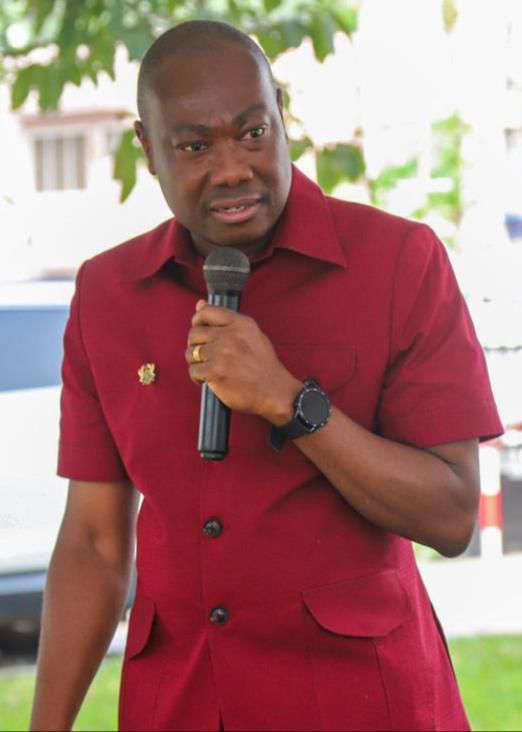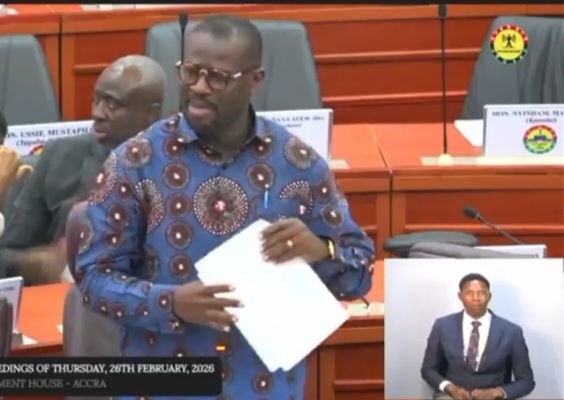
Minority Chief Whip and Member of Parliament for Nsawam-Adoagyiri, Frank Annoh-Dompreh, has raised serious concerns on the floor of the Parliament of Ghana over what he described as inconsistencies between approved parliamentary formulas and newly introduced government guidelines for resource allocation.
Speaking during proceedings on Friday, Annoh-Dompreh pointed to specific allocation guidelines outlining how funds are to be distributed across key sectors, noting that the framework assigns percentages totaling 100 percent.
According to him, the breakdown includes 25 percent for government flagship programmes such as the design and construction of 24-hour economy model markets, 20 percent for completion of legacy projects, and 10 percent allocations each for health facilities, educational infrastructure, water provision, environmental sanitation, and school furniture.
An additional 5 percent is designated for administrative functions, including monitoring and evaluation.
However, the Minority Chief Whip argued that the current guidelines represent a significant departure from the allocation formula previously approved by Parliament. He warned that such deviations, if left unchecked, could set a dangerous precedent and potentially undermine the constitutional authority of Parliament in matters relating to public resource allocation.
Annoh-Dompreh expressed concern that allowing executive agencies or other state institutions to alter frameworks approved by Parliament could erode the principle of separation of powers, which is central to democratic governance.
He stressed that decisions taken by Parliament must not be compromised or overridden by any other arm of government.
To address the issue, he called for a full-scale investigation into the matter, proposing that it be referred to the relevant parliamentary body for detailed scrutiny.
Specifically, he appealed to the Speaker to refer the matter to the committee responsible for local government affairs to examine the discrepancies and report back to the House.
According to him, such an investigation would help establish the facts, clarify the differences between the approved formula and the new guidelines, and enable Parliament to take a definitive decision on the matter.
He emphasized that the goal was not to politicise the issue but to protect parliamentary integrity and ensure that due process is followed.
“This is about firming up our parliamentary jurisprudence and giving real meaning to the doctrine of separation of powers,” he said, adding that Parliament must safeguard its constitutional mandate at all times.
Annoh-Dompreh concluded by urging the House to act decisively, stressing the need to resolve the matter conclusively to prevent future institutional conflicts and to reinforce the authority of Parliament in the governance structure.