J. A. Sarbah
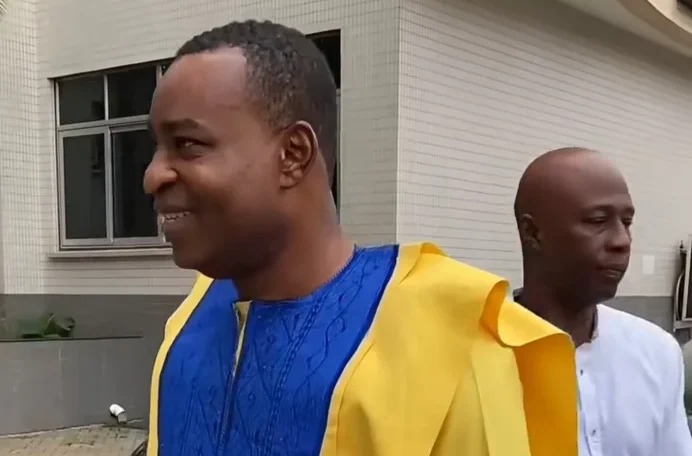
Bernard Antwi-Boasiako walked into Criminal High Court 4 this morning [Monday] and was handed twenty years before noon.
Twenty years. For an assignment of mineral rights that was never documented. For a written instrument that was never produced. For a corpus delicti that does not exist anywhere in the evidence record of the trial that just convicted him of it.
Let me be precise about what happened in that courtroom today.
Count One of the charge sheet alleged assignment of mineral rights without ministerial approval. Under Section 14(1) of the Minerals and Mining Act, 2006, Act 703, an assignment is a formal legal transfer of proprietary interest.
It requires a written instrument. It is not a verbal arrangement. It is not meant to be a common understanding between two men on a mining concession in Samreboi.
The defence’s own expert witness, mining engineer Wisdom Edem Gomashie, told the court on record: “An assignment is not executed verbally.” The prosecution’s own witness, Henry Okum, confirmed under cross-examination that there was no written agreement, no deed of assignment, and no ministerial approval between himself and Wontumi. Pause here. The prosecution’s first witness, Michael Gyedu Ayisi, admitted he had no documentary evidence of any assignment and that everything he knew came from what Okum told him. Pause again. He had never met Wontumi personally. He had only seen him on television.
The court convicted Wontumi on Count One without the written instrument that the law requires to exist for the offence to have been committed. The literal body of the crime was never produced. The court substituted inference, hearsay, pressure from above, and the fact of Okum’s presence on the land for the documentary evidence that the statutory charge demands. That is not proof beyond reasonable doubt. It is proof beyond reasonable proximity.
Criminal jurisprudence has one foundational principle that no administration, no court, and no political agenda can legitimately dissolve. The prosecution must prove its case beyond reasonable doubt. It did not suggest it. Nor imply it. Nor build it from the testimony of a man who learned what he knows from another man who had every incentive to minimise his own culpability.
Proof beyond reasonable doubt is not a technicality invented to free the guilty. It is the wall that stands between every citizen and the state’s power to imprison them at will. That wall was not maintained in Criminal High Court 4 today. Justice Audrey Kocuvie-Tay conveniently threw that fundamental threshold in criminal law to the Togo gods.
On the corporate liability question, the court found Wontumi personally liable as the de facto controller of Akonta Mining because the company did not operate through a functional board of directors. This reasoning pierces the corporate veil without applying the established legal test, which requires fraud, improper conduct, or the deliberate use of the corporate form to evade liability.
The absence of a functional board does not transform a director into a personal criminal defendant for activities conducted through the company. The court created a precedent today that will expose every Ghanaian business director of an imperfectly governed company to personal criminal liability for the company’s operational conduct.
That is a new dangerous legal architecture constructed for this specific defendant, Wontumi, in order to satisfy this specific political moment. The paymaster expects nothing less than Wontumi’s head, hence this hollow legal reasoning was imported to achieve the aim.
On July 16, four days before the judgment, the defence filed an application asking the court to refer constitutional questions to the Supreme Court under Article 130(2) of the 1992 Constitution, which gives the Supreme Court exclusive jurisdiction to interpret constitutional matters arising in lower court proceedings.
The court dismissed that application on the morning of the judgment and proceeded immediately to deliver its verdict. A court that dismisses a constitutional reference application and in the same breath delivers a twenty-year sentence has decided that the constitutional question does not need the institution empowered by the Constitution to answer it. That is not judicial confidence. That is constitutional avoidance dressed as procedural efficiency.
Now look at who sits behind this prosecution.Ibrahim Mahama, the President’s brother and head of Engineers and Planners, sued Bernard Antwi-Boasiako for defamation in July 2020 after Wontumi made public statements against him. That case dragged for years, unresolved, the personal score neither settled nor forgotten.
When the NDC returned to power in January 2025, the pursuit began immediately. EOCO froze Wontumi’s accounts. His business operations were halted. They did not end there. They ransacked his house and froze every personal effect. Wontumi went on his own television station in May 2025 and asked the question directly: “Am I not a Ghanaian anymore? Now that you have won the election and become President, does that mean I am no longer a Ghanaian?” In February 2026, he publicly apologised to Mahama for the intemperate language of the 2024 campaign, hoping the apology would soften the pursuit. It produced no relief.
The prosecution continued. The trial accelerated. The verdict arrived this morning. The legal reasoning did not jail Wontumi; he was jailed by the first family.
Wontumi’s conviction will be appealed. The Court of Appeal will examine a record in which the prosecution’s own witnesses denied the existence of the written document that the statutory charge required, in which a corporate veil was pierced without legal justification, and in which a constitutional reference was dismissed without the Supreme Court ever being asked the questions it alone has authority to answer.
The appeal will take time. The political purpose will already have been served.
The NDC celebrated before the verdict was delivered. Their social media networks erupted in coordinated jubilation before a single written address had been filed, before July 20 had arrived. Martin Kpebu went on television this morning and said Ghana is working again. It is a stupid talk from someone who should know better.
Ghana is not working again. A man has been given twenty years imprisonment on hearsay. The prosecution’s own witnesses denied the existence of the written document the statutory charge required. The personal grievances of a president and his brother have been processed through a courtroom and delivered as a sentence. And the court that delivered it will resume its sitting tomorrow.
Twenty years for insulting the Mahamas. Dressed in the language of the Minerals and Mining Act.Justice Audrey Kocuvie-Tay has indeed abused the judicial oath and sentenced an inconvenient political opponent to prison.
We will not forgive this injustice