
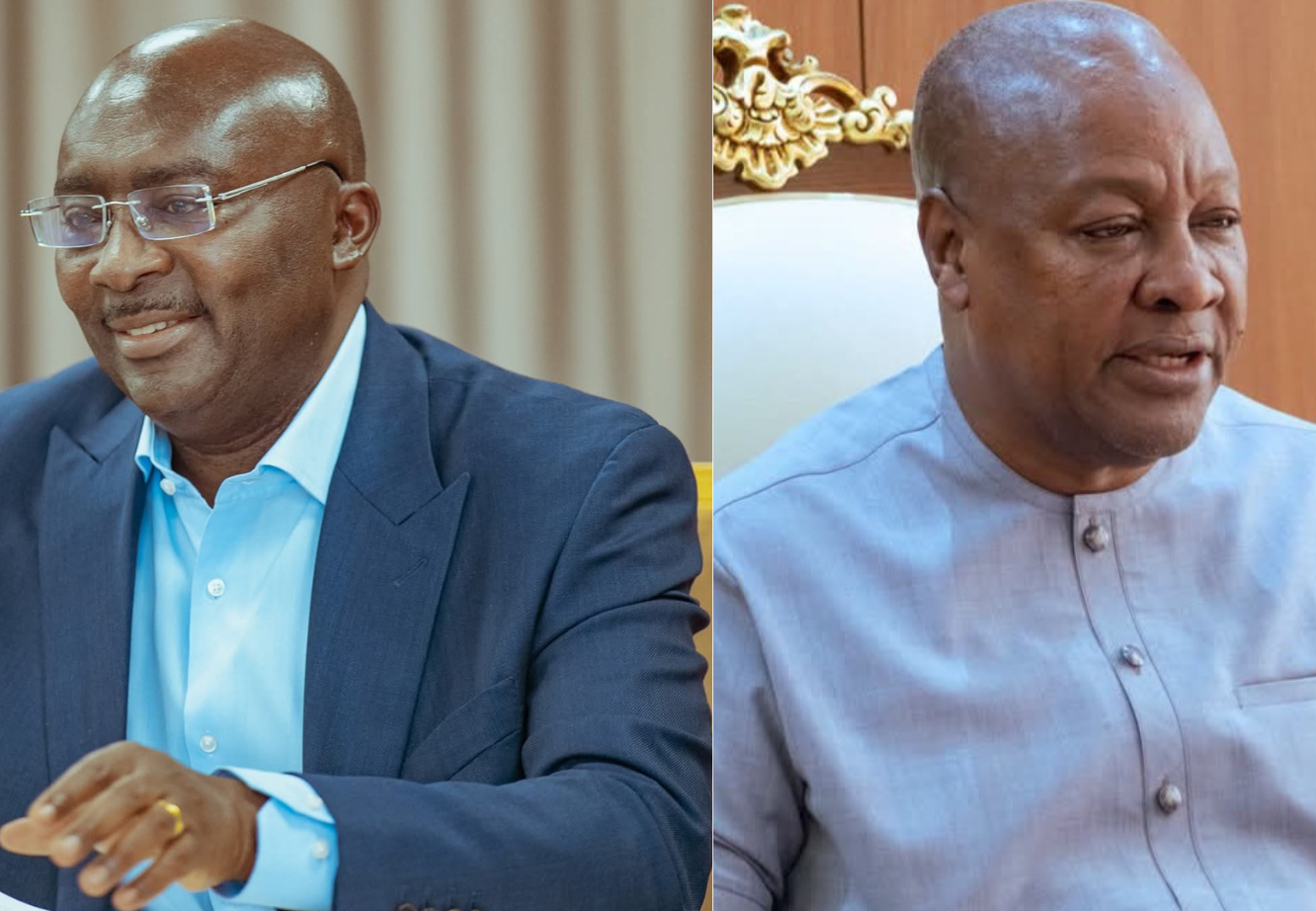
By Daniel Bampoe
New Patriotic Party (NPP) flagbearer for the 2028 election, Dr. Mahamudu Bawumia, has launched a strong opposition to the controversial Tribunals Bill, 2026, urging President John Dramani Mahama to withhold his assent and instead initiate broad national consultations to prevent what he describes as the creation of a parallel justice system that could undermine Ghana’s democracy and the independence of the judiciary.
In a televised address, the former Vice President warned that the proposed legislation risks reviving a judicial architecture that many Ghanaians associate with painful chapters in the country’s political history, referencing the Kangaroo courts of the PNDC military junta epitomized by the public tribunals.
According to him, while reforms aimed at improving the justice delivery system are necessary, they must never come at the expense of judicial independence, due process, and public confidence in the courts.
Dr. Bawumia’s intervention comes days after Parliament passed the Tribunals Bill, 2026, under a certificate of urgency after waiving the mandatory one-day interval before the third reading.
The Minority Caucus opposed the legislation during proceedings but was outvoted by the governing National Democratic Congress (NDC) majority.
The NPP flagbearer argued that the Bill has generated widespread concern beyond partisan politics, pointing to the position taken by the Trades Union Congress (TUC), which has publicly demanded the complete withdrawal of the legislation.
“This is not a partisan request,” Dr. Bawumia stated. “The Trades Union Congress, representing millions of Ghanaian workers, has called for the Bill to be withdrawn altogether. Those are the words of Ghanaian workers, not of any political party.”
He observed that organized labour, despite voicing strong objections throughout the legislative process, was ignored as Parliament proceeded to approve the Bill.
According to him, such concerns from key national stakeholders should not be dismissed when dealing with legislation that fundamentally alters the country’s justice delivery architecture.
Dr. Bawumia further criticized the process leading to the Bill’s passage, arguing that the government’s overwhelming parliamentary majority should be exercised with restraint rather than used to force through contentious legislation.
“Not everything that can be passed should be passed,” he cautioned. “History will not judge how many votes a law received. Rather, it will judge whether the law reflected the collective aspirations and broad consensus of the Ghanaian people.”
The former Vice President also questioned why Parliament proceeded with the legislation while the report of President Mahama’s own Constitution Review Committee remains unpublished.
He recalled that the Committee had reportedly recommended the removal of Regional Tribunals from the 1992 Constitution on the grounds that the High Court had long assumed their responsibilities.
According to Dr. Bawumia, it is contradictory for government to legislate in the opposite direction before making the committee’s recommendations available to the public for national debate.
He therefore appealed directly to President Mahama to suspend assent to the Bill, publish the Constitution Review Committee’s report, and allow Ghanaians to fully understand the recommendations before any major restructuring of the justice system takes place.
As an alternative, Dr. Bawumia proposed a broad national dialogue involving the Ghana Bar Association, other legal professional bodies, the Judiciary, organized labour, civil society organizations, political parties, and other relevant stakeholders to build consensus on any reforms affecting the country’s judicial system.
He said such consultations should be undertaken through the Council of State in accordance with Articles 90 and 106 of the 1992 Constitution.
Throughout his statement, Dr. Bawumia repeatedly stressed that justice belongs to all Ghanaians and must never become an instrument of political convenience.
“Justice belongs to no government and no political party. Justice belongs to the Ghanaian people,” he declared.
Drawing on the political history, the former Vice President warned against resurrecting tribunal systems that many citizens remember as symbols of fear and political persecution.
“Ghanaians remember tribunals, and we remember what was done in their name,” he stated, cautioning that the proposed legislation risks creating what he described as a “second system of justice” operating alongside the existing courts.
While acknowledging that congestion within the judicial system remains a legitimate concern, Dr. Bawumia argued that the solution lies in strengthening the existing courts rather than establishing new tribunals.2
“The answer to congested courts is to strengthen the courts through the appointment of more judges, construction of more courtrooms, investment in digitisation, and improvement in judicial administration—not by creating another justice system,” he argued.
Concluding his appeal, Dr. Bawumia urged the President to use the moment to unite rather than divide the nation.
“Mr. President, the pen is in your hand. Use it not to sign this Bill, but to write an invitation to the nation,” he appealed.


