BY ISSAH OLEGOR
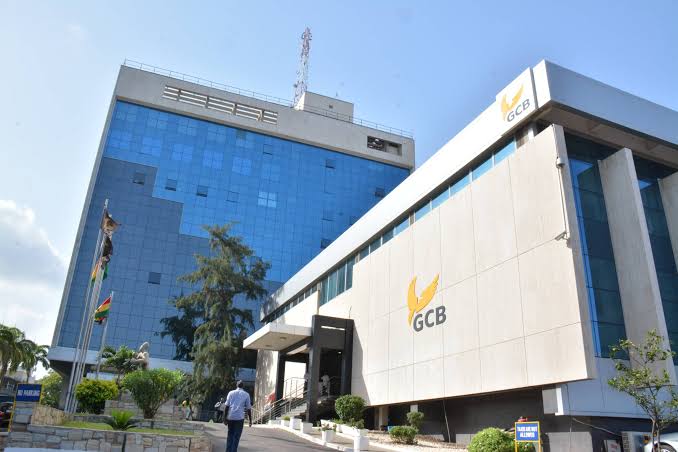
GCB Bank has reclaimed its position as the largest bank by deposit market share, overtaking Ecobank Ghana in 2025 as competition for customers and deposits intensified across the banking industry.
The development, contained in the PwC Ghana Banking Survey 2026, represents a significant reversal from 2024, when Ecobank Ghana led the industry with a 14.33 per cent share of total deposits. GCB, which ranked second that year, increased its share to 12.37 per cent in 2025, while Ecobank’s share fell sharply to 10.52 per cent.
Stanbic Bank Ghana maintained third place with a 7.80 per cent share, leaving GCB, Ecobank and Stanbic collectively controlling about 30.7 per cent of deposits in the industry.
GCB returns to the top
GCB’s return to the number-one position comes despite a slight decline in its market share from the 12.99 per cent recorded in 2024. Its 2025 share, however, remained significantly higher than the 10.86 per cent recorded in 2023, suggesting that the bank has strengthened its position in the deposit market over the period.
Based on total industry deposits of GH¢334.3 billion in 2025, GCB’s 12.37 per cent share represents approximately GH¢41.3 billion in deposits.
Ecobank’s 10.52 per cent share translates into approximately GH¢35.2 billion.
The figures underline the scale of the competition between the two institutions, particularly as banks seek to secure stable deposits to support lending, investment and other financial activities.
Ecobank’s dramatic fall
Ecobank Ghana’s movement from the top of the rankings to second place is one of the most notable developments in the 2025 deposit market.
The bank controlled 14.33 per cent of industry deposits in 2024, making it the largest deposit-taking bank at the time.
Its share fell to 10.52 per cent in 2025, allowing GCB to regain the lead.
The survey does not, in the material provided, attribute Ecobank’s decline to a specific factor. The change therefore reflects a significant shift in the distribution of deposits across the banking industry rather than evidence of a single identified cause.
Banking industry deposits surge
The change in market leadership occurred against the backdrop of substantial growth in deposits across the banking sector.
Industry deposits increased by 25 per cent in 2025, rising from GH¢266.5 billion in 2024 to GH¢334.3 billion.
PwC attributed the expansion to improved macroeconomic stability and increased customer confidence, alongside the continued growth of branch and agency banking networks and greater adoption of digital banking services.
The growth was recorded across several categories of deposits.Current account balances increased by 15.8 per cent to GH¢184.9 billion, pointing to increased activity through transaction accounts.
Time deposits recorded a considerably stronger 56.8 per cent increase, reaching GH¢49.2 billion, while call deposits grew by 37.5 per cent to GH¢16.7 billion. According to the survey, the expansion in time and call deposits was partly influenced by customers’ interest in fixed-term investment products offering attractive returns.
Stanbic maintains third position
While GCB and Ecobank exchanged positions at the top, Stanbic Bank Ghana retained its position as the industry’s third-largest bank by deposit market share.
Stanbic recorded a 7.80 per cent share in 2025.
The combined strength of GCB, Ecobank and Stanbic means that the three institutions accounted for roughly three out of every ten cedis held as industry deposits during the year.
Their position reflects the advantage enjoyed by major banks with established branch networks, large retail and corporate customer bases and increasingly sophisticated digital banking platforms.
OmniBSIC makes biggest jump
The PwC survey also highlights significant gains by some mid-sized banks, with OmniBSIC Bank emerging as one of the strongest movers in the rankings.
The bank increased its deposit market share from 3.15 per cent in 2024 to 6.02 per cent in 2025.
That growth propelled OmniBSIC from 13th position in 2024 to fifth in 2025.
PwC linked the bank’s performance to focused customer acquisition efforts and growth in retail and small and medium-sized enterprise deposits.
The movement demonstrates that competition for deposits is no longer confined to the traditional market leaders, with smaller institutions increasingly challenging established players for customers.
Zenith and First Atlantic also gain ground
Zenith Bank Ghana also recorded an improvement in its position, increasing its deposit market share from 5.91 per cent to 6.27 per cent.
The survey associated the bank’s performance with targeted deposit mobilisation and digital banking initiatives.
First Atlantic Bank similarly increased its share from 4.36 per cent to 4.98 per cent.
PwC attributed the improvement to customer retention efforts and enhanced business banking offerings.
These movements point to a more competitive deposit market, where banks are relying on customer acquisition, digital platforms, specialised products and stronger relationships with retail, corporate and SME customers to expand their deposit bases.
What the new rankings mean
The latest figures show that Ghana’s banking sector is expanding, but the growth is also reshaping the competitive landscape.
GCB’s return to the top demonstrates the ability of an established domestic bank to regain market leadership, while Ecobank’s fall highlights how quickly rankings can change even among the industry’s biggest institutions.
At the same time, the rapid rise of OmniBSIC and gains recorded by Zenith Bank and First Atlantic suggest that mid-sized institutions are taking a larger share of the expanding deposit pool.