By Daniel Bampoe
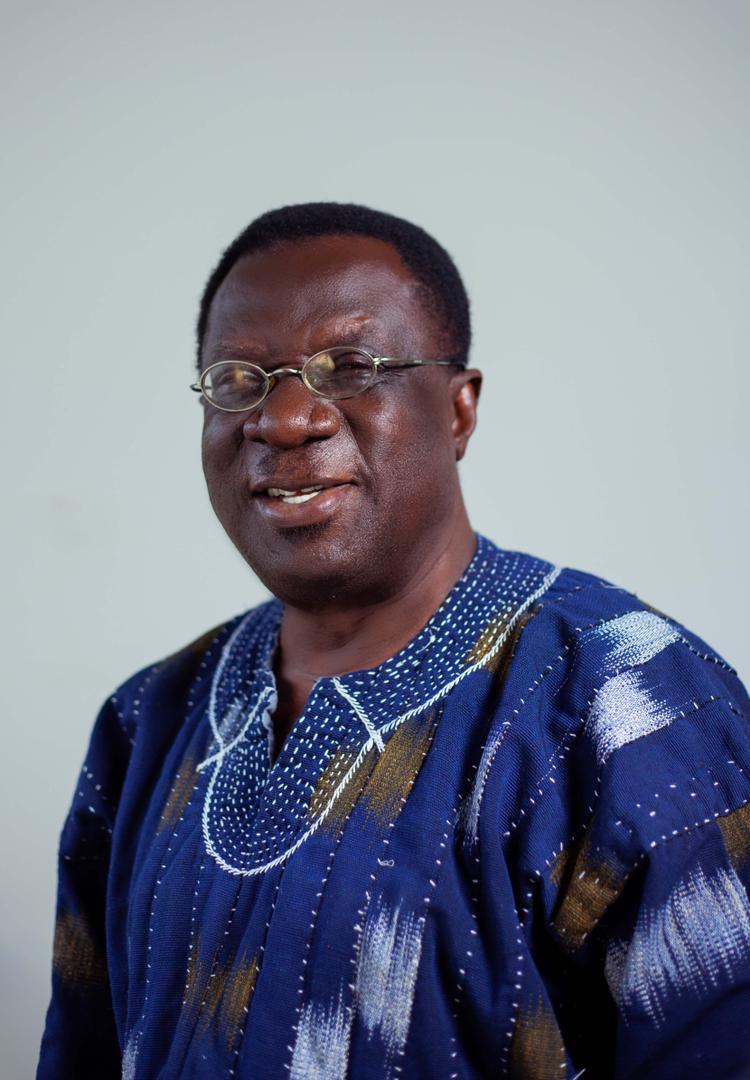
A high-profile criminal trial is unfolding at the High Court (Criminal Division) in Accra, where the former Chairman of the Ghana Infrastructure Investment Fund (GIIF), Professor Christopher Ameyaw-Akumfi, and the fund’s former Chief Executive Officer, Solomon Asamoah, are facing six counts of financial crimes, including conspiracy, wilfully causing financial loss to the state, and intentional dissipation of public funds.
At the heart of the case is a controversial $2 million payment made in 2019 to a South African firm, Africa Investor Holdings Limited, for a proposed Accra SkyTrain project — a futuristic urban transportation initiative that never materialized.
Background
The SkyTrain project was part of a broader initiative by the Ministry of Railways Development, launched in 2018, to promote urban mass transit through public-private partnerships.
The project was to be executed on a Design, Build, Finance, and Operate basis.
In November 2018, a Memorandum of Understanding (MoU) was signed between the Ministry, GIIF, and Africa Investor Holdings (Proprietary) Limited — a company registered in South Africa — to begin work on an elevated light rail system in Accra.
GIIF, established by the Ghana Infrastructure Investment Fund Act, 2014 (Act 877), is a state institution mandated to mobilize and manage resources for national infrastructure development.
The fund draws its resources from VAT revenues, state equity divestments, grants, and voluntary contributions.
Under the MoU, GIIF was expected to act as the anchor equity investor in the SkyTrain project and conduct due diligence before committing any funds.
However, court documents reveal a startling deviation from this requirement.
Alleged Offences
According to a charge sheet filed by the Attorney-General’s Office, both Ameyaw-Akumfi and Asamoah, in February 2019, conspired to cause financial loss of $2 million to the Republic by authorizing payment to Africa Investor Holdings without board approval or proper due diligence.
A shareholders’ agreement had been signed in January 2019 between GIIF and Africa Investor Holdings Limited, this time registered in the Seychelles, with a provision that GIIF would receive 10% of shares in a Mauritius-based company named Ai SkyTrain Consortium Holdings.
Just weeks after this agreement, the consortium demanded $2 million for the shares.
On February 25, 2019, a joint letter signed by both accused persons instructed GIIF’s bank, United Bank for Africa (UBA), to wire the funds to Africa Investor Holdings’ account in Mauritius.
The transaction was completed, but according to prosecutors, no shares were ever received, no progress was made on the SkyTrain project, and no follow-up actions or board discussions took place afterward.
Breach of Internal Controls
Investigations further revealed that neither GIIF’s internal investment procedures nor board approvals were followed before the transaction.
GIIF’s policies demand a thorough internal review, investment committee recommendations, and board endorsement for all investments — especially those as substantial as $2 million.
Despite this, no documentation or board meeting minutes support the decision to transfer the funds. While Solomon Asamoah claimed he had board approval, this was flatly denied by all other board members during police investigations.
Professor Ameyaw-Akumfi, in his statement to the police, said he authorized the transfer on Asamoah’s recommendation.
Prosecutors argue that both men failed to ensure accountability for public funds and violated their fiduciary duties.
Charges and Implications
The accused face six charges:
1. Conspiracy to commit wilfully causing financial loss
2. Wilfully causing financial loss (Asamoah)
3. Wilfully causing financial loss (Ameyaw-Akumfi)
4. Conspiracy to intentionally dissipate public funds
5. Intentional dissipation of public funds (Asamoah)
6. Intentional dissipation of public funds (Ameyaw-Akumfi)
All charges are grounded in provisions of the Criminal Offences Act, 1960 (Act 29) and the Public Property Protection Decree, 1977 (SMCD 140).
If convicted, the former officials face heavy penalties, including possible custodial sentences and disqualification from holding public office.
This case casts a spotlight on the oversight and accountability mechanisms in public sector investments. GIIF, envisioned as a strategic vehicle to drive infrastructure growth, now finds itself mired in controversy over a project that promised modern mass transit but delivered nothing.
The Attorney-General, Dr. Dominic Akuritinga Ayine, who signed the charge sheet on May 12, 2025, has assured the public to retrieve the lost funds.