BY Issah Olegor
Public policy think tank CUTS International has called on the government to significantly increase funding for road maintenance in the upcoming Mid-Year Budget Review, warning that deteriorating roads, damaged bridges and failing drainage systems are imposing growing economic and social costs on Ghanaians across the country.
According to the organization, the heavy rains experienced this year have exposed major weaknesses in the road infrastructure, leaving many roads in deplorable conditions and creating serious challenges for motorists, businesses, commuters and local communities.
The call comes at a time when several roads across the country have developed extensive potholes, erosion and structural failures due to persistent rainfall and inadequate maintenance.
In some areas, roads that initially developed minor defects have deteriorated into deep gullies, making travel difficult and increasing the risk of accidents.
CUTS International believes the situation requires urgent government intervention and should be treated as a national infrastructure emergency rather than a routine maintenance issue.
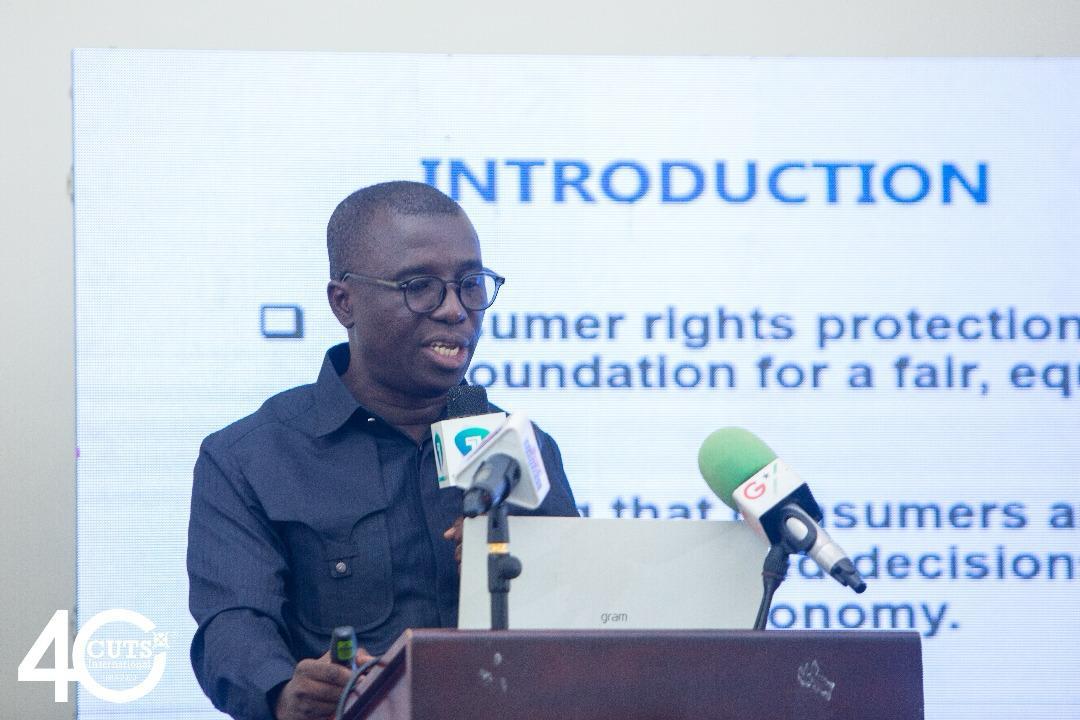
Speaking on the matter, the Director of the West Africa Regional Centre of CUTS International, Appiah Kusi Adomako, noted that the worsening state of roads is directly affecting the daily lives of ordinary Ghanaians through higher transport costs, vehicle breakdowns, longer travel times and increased fuel consumption.
“Every day, ordinary Ghanaians are paying the price for bad roads. They spend more time in traffic, pay more to fix their cars, use more fuel and face higher risks on the road. This is no longer about minor potholes.
In many places, the roads are breaking down badly, and the government must respond with urgency,” he stated.
The policy advocacy group observed that while road maintenance projects are generally more effective during the dry season, the extent of damage currently being experienced means government cannot afford to wait until the rains subside before taking action.
According to CUTS, several critical roads now require emergency interventions to ensure that they remain safe and accessible for the thousands of road users who depend on them daily.
The organization further argued that temporary patching of potholes has proven ineffective in many parts of the country because underlying structural defects are often ignored. It pointed out that poor drainage systems, weak road foundations and recurring flooding continue to undermine maintenance efforts and cause the same sections of roads to deteriorate repeatedly.
As a result, CUTS is advocating a comprehensive maintenance strategy that includes drainage improvement works, bridge rehabilitation, reconstruction of weakened road bases and stricter supervision of road contractors.
The think tank’s concerns also extend to the government’s ongoing infrastructure expansion programme under the Big Push agenda.
While commending government for prioritizing the construction of new roads and major infrastructure projects aimed at improving connectivity and economic growth, CUTS warned against neglecting existing road assets.
According to the organization, sustainable infrastructure development requires a balance between constructing new roads and preserving existing ones.
The group stressed that allowing already-built roads to deteriorate while investing heavily in new projects would ultimately increase maintenance costs and weaken the country’s transportation network.
“As government pursues its Big Push in road construction, we must remember that a road network is only as strong as its weakest link. New roads are important, but existing roads must also be protected. We cannot build new roads with one hand and allow older roads to collapse with the other,” Adomako emphasized.
The organization also highlighted concerns about the adequacy of funding available for road maintenance.
The 2026 national budget allocated approximately GH¢3 billion to the Ghana Road Maintenance Trust Fund, compared to an estimated GH¢3.1 billion allocation in 2025. While CUTS welcomed the government’s commitment to supporting the fund, it argued that the scale of destruction caused by this year’s rains requires additional financial intervention through the Mid-Year Budget Review.
According to the think tank, the current damage goes beyond routine road deterioration and includes extensive destruction of drains, culverts, bridges and other critical road infrastructure
CUTS warned that failure to provide adequate funding now would result in much higher economic costs in the future.
“The Road Fund must be strong enough to do what it was created to do. If we do not put enough money into road maintenance today, the cost will not disappear. It will be paid by drivers, passengers, businesses, farmers, traders and families through higher transport costs, damaged vehicles, lost time and avoidable accidents,” Adomako said.
Beyond central government funding, the organization is also advocating greater support for Metropolitan, Municipal and District Assemblies (MMDAs) to enable them respond more quickly to local road failures and bridge damage.
CUTS noted that local authorities are often the first to identify emerging infrastructure challenges within their jurisdictions and should therefore be empowered with the resources and authority necessary to undertake timely interventions.
In this regard, the think tank called on the Ministry of Roads and Highways to resolve issues surrounding the suspended National Roads Authority Act, 2024 (Act 1118), arguing that the continued suspension of the legislation is undermining efforts to decentralize road management and improve responsiveness.