
BY GRACE ZIGAH
A senior official of the Food and Drugs Authority (FDA) has cautioned Ghanaians against believing claims that beverages can cure, treat or prevent diseases unless such products have undergone the necessary scientific assessment and regulatory approval.
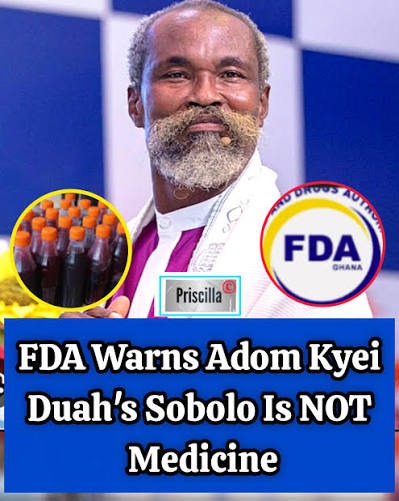
The warning, issued by Dr Martin Kusi, comes amid renewed public attention surrounding a sobolo beverage associated with the founder and leader of Believers Worship Centre, Stephen Adom Kyei-Duah, which has been promoted by some followers with claims of healing and medicinal benefits.
Speaking in a recent interview, Dr Kusi explained that under the regulatory framework, there is a clear legal distinction between beverages consumed for refreshment and products marketed as medicines.
According to him, sobolo is ordinarily classified as a beverage intended to quench thirst and provide refreshment. However, he stressed that once any product is advertised or promoted with claims that it can cure, treat or prevent diseases, its legal classification immediately changes.
“Once you say that this product can cure, treat or prevent a disease, then it is no longer just a beverage. It becomes a medicine,” Dr Kusi explained.
He said that under Ghana’s public health laws, any product presented as a medicine must first undergo rigorous scientific evaluation by the Food and Drugs Authority before it can legally be registered and marketed for medicinal purposes.
The FDA official emphasised that regulatory approval is based on scientific evidence of a product’s safety, quality and effectiveness—not on public testimonials or claims made by promoters.
Addressing the sobolo linked to Stephen Adom Kyei-Duah, Dr Kusi stated that the product has not been registered with the FDA as a medicine, adding that no product can legally be promoted as a treatment for diseases without completing the Authority’s approval process.
He questioned the basis upon which medicinal claims were being associated with the beverage, reiterating that the FDA would not recognise any product as medicine simply because individuals claimed it possessed healing properties.
Dr Kusi further warned that advertising or selling products with disease-treatment claims without regulatory approval could constitute a breach of Ghana’s laws governing medicines and food products.
According to him, the FDA has consistently maintained that businesses, religious organisations and individuals must comply with established regulations before promoting any product for therapeutic purposes.
He noted that the practice of presenting beverages, oils, herbs and other consumable products as remedies for illnesses is not new in Ghana, particularly within some religious settings where certain products are sometimes promoted as having supernatural or healing properties.
However, he stressed that regardless of the source of such claims, all products marketed as medicines must satisfy the same scientific and regulatory standards required by the FDA.
The senior FDA official therefore urged consumers to exercise caution whenever they encounter products advertised as treatments for diseases, advising the public to verify whether such products have been officially approved before purchasing or consuming them.
He encouraged Ghanaians not to rely solely on promotional messages, testimonies or social media endorsements but instead to check the FDA’s registration status of products making medicinal claims.
The Food and Drugs Authority has repeatedly advised the public that products claiming to cure, prevent or treat diseases should only be used if they have undergone the required scientific evaluation and received official approval from the Authority.


