BY GRACE ZIGAH
A glimpse into the private residence of renowned academician and NDC politician Prof. Joshua Alabi has triggered a fresh social-media debate, with Ghanaians turning their attention from politics and academia to the striking scale of the property and the vehicles parked within its compound.
The discussion began after a TikTok video posted by Ghanaian blogger Citizen Sawa Jnr surfaced online on Saturday, September 5, 2026, showing what appeared to be Prof. Alabi’s sprawling residential estate in Accra.
Although the video was seemingly intended to capture a routine moment involving the prominent politician, it was the enormous residential compound that quickly became the main attraction for viewers.
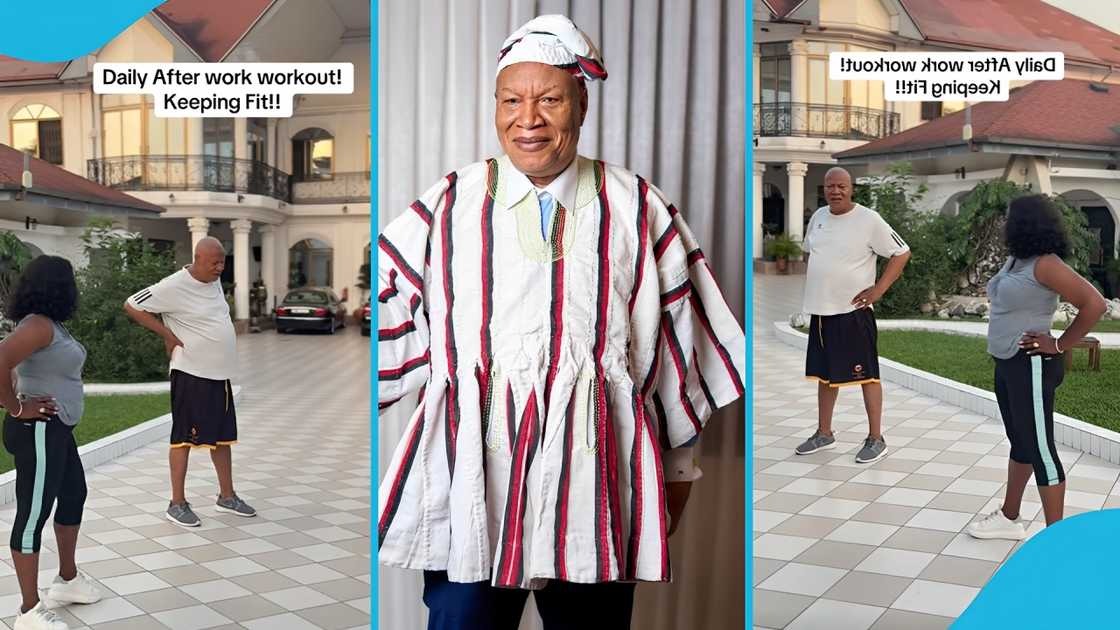
In the footage, Prof. Alabi was seen exercising outdoors alongside his wife, Goski, personal trainer and other close associates. The group appeared to be going through a regular fitness routine, with scenes showing jogging, stretching and interactions within the expansive compound.
But rather than focusing on the exercise session, social-media users were drawn to the property in the background.
The residence appeared to feature an extensive paved courtyard with several vehicles parked within it, while the size and elaborate nature of the estate dominated much of the footage.
The images immediately generated widespread reactions, with viewers debating the lifestyle of prominent figures in Ghana’s political establishment.
For some Ghanaians, the video offered a rare glimpse into the private life of a public figure whose career has largely been associated with academia and politics.
Others used the footage to raise broader questions about the accumulation and display of wealth among Ghana’s political elite, calling lifestyle audit.
Prof. Alabi is a well-known figure in Ghanaian public life. An academician and member of the National Democratic Congress (NDC), he has occupied several significant positions over the years and is particularly associated with the University of Professional Studies, Accra (UPSA), where he served as the institution’s first Vice-Chancellor.
His public career has also extended beyond academia, making him a familiar face within political landscape. That combination of academic prominence and political involvement has made the appearance of his luxurious residential property particularly interesting to social-media users.
The viral footage, however, does not establish the value of the property or provide evidence about how it was acquired or financed. Neither does the video itself demonstrate that the vehicles seen on the premises belong personally to Prof. Alabi.
Despite those limitations, the visual impact of the footage was enough to trigger intense online commentary.
Some viewers marvelled at the architecture and size of the residence, while others questioned why politicians and public figures frequently appear to enjoy lifestyles that seem far removed from the economic struggles experienced by ordinary Ghanaians.