BY Daniel Bampoe
A growing chorus of critics is questioning what they describe as a pattern in the handling of high-profile criminal investigations by the security agencies under President John Mahama administration, arguing that several major cases announced with considerable publicity have failed to produce the level of transparency and public accountability expected.
The concerns have been directed at the leadership of the country’s security architecture, including the Police Council chaired by Vice President Professor Naana Jane Opoku-Agyemang and the Ministry of the Interior led by Muntaka Mubarak Mohammed.
According to the critics, over the past year and a half, security agencies have frequently publicised major arrests or security operations, particularly in cases with political significance, only for investigations to subsequently disappear from the public domain without regular updates on prosecutions or the identities of key suspects.
They argue that while government officials and security agencies are quick to announce breakthroughs, they have been less forthcoming with information once investigations move beyond the initial stage.
The critics point to several cases which they believe illustrate the trend.
The first dates back to February 9, 2025, barely a month after the current administration assumed office, when a National Security team led by Richard Jakpa raided a warehouse at Sapeiman.
Images from the operation showed 12 twenty-foot shipping containers allegedly containing large quantities of counterfeit United States dollars and Ghana cedi notes concealed in wooden boxes beneath bags of cement, together with what appeared to be fake gold bars.
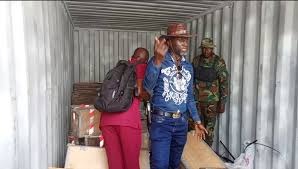
The operation attracted nationwide attention, with authorities indicating that the facility was linked to an individual identified only as “Alhaji.”
However, critics say that despite the magnitude of the discovery, the public has not been informed of the identity of the alleged owner of the warehouse or the outcome of investigations more than a year later.
A second example cited relates to the interception of a tipper truck carrying 3.3 tonnes of cocaine at Pedu Junction near Cape Coast in March 2025.The narcotics, reportedly concealed beneath heaps of sand while the truck travelled from Takoradi to Accra, were estimated to have a street value of approximately US$350 million, making the seizure one of the largest cocaine interceptions in Ghana’s history.
According to the critics, although two occupants were arrested, public attention shifted after the truck driver allegedly mentioned the name of a former National Democratic Congress (NDC) parliamentary candidate as the owner of the consignment.
They contend that following the emergence of the political dimension of the case, official updates became scarce and the public has since received little information regarding prosecutions or the final outcome of the investigation.
The latest issue raising similar concerns involves the recent methamphetamine seizure in Australia linked to a shipment originating from Ghana.Australian Border Force officers intercepted 320 kilograms of methamphetamine concealed in charcoal containers, with the drugs estimated to be worth hundreds of millions of dollars on the illicit market.
On June 24, 2026, the Narcotics Control Commission (NACOC), working with the National Intelligence Bureau (NIB), announced that it had arrested what it described as a key suspect connected to the international trafficking operation.
However, authorities declined to disclose the identity of the suspect.
Officials explained that the suspect is a Ghanaian woman whose identity cannot yet be made public because investigators are continuing efforts to identify and arrest other members of the alleged transnational syndicate.
The decision has generated criticism from sections of the public, who argue that withholding the suspect’s identity has created unnecessary speculation and raised questions about transparency.
The critics contend that if individuals associated with the opposition New Patriotic Party (NPP) had been linked to similar investigations, authorities would have disclosed their identities much earlier and publicised the investigations more aggressively.
They accuse the government of selectively communicating security matters for political advantage while failing to pursue cases to their logical conclusion in the public eye.
According to the critics, the absence of regular updates on these high-profile investigations risks undermining public confidence in the country’s criminal justice system and the credibility of state security institutions.
They are calling on the government and the various security agencies to provide periodic updates on major investigations, disclose the status of prosecutions where legally permissible, and ensure that politically sensitive criminal cases are handled with the same level of transparency regardless of the individuals involved.