BY Daniel Bampoe
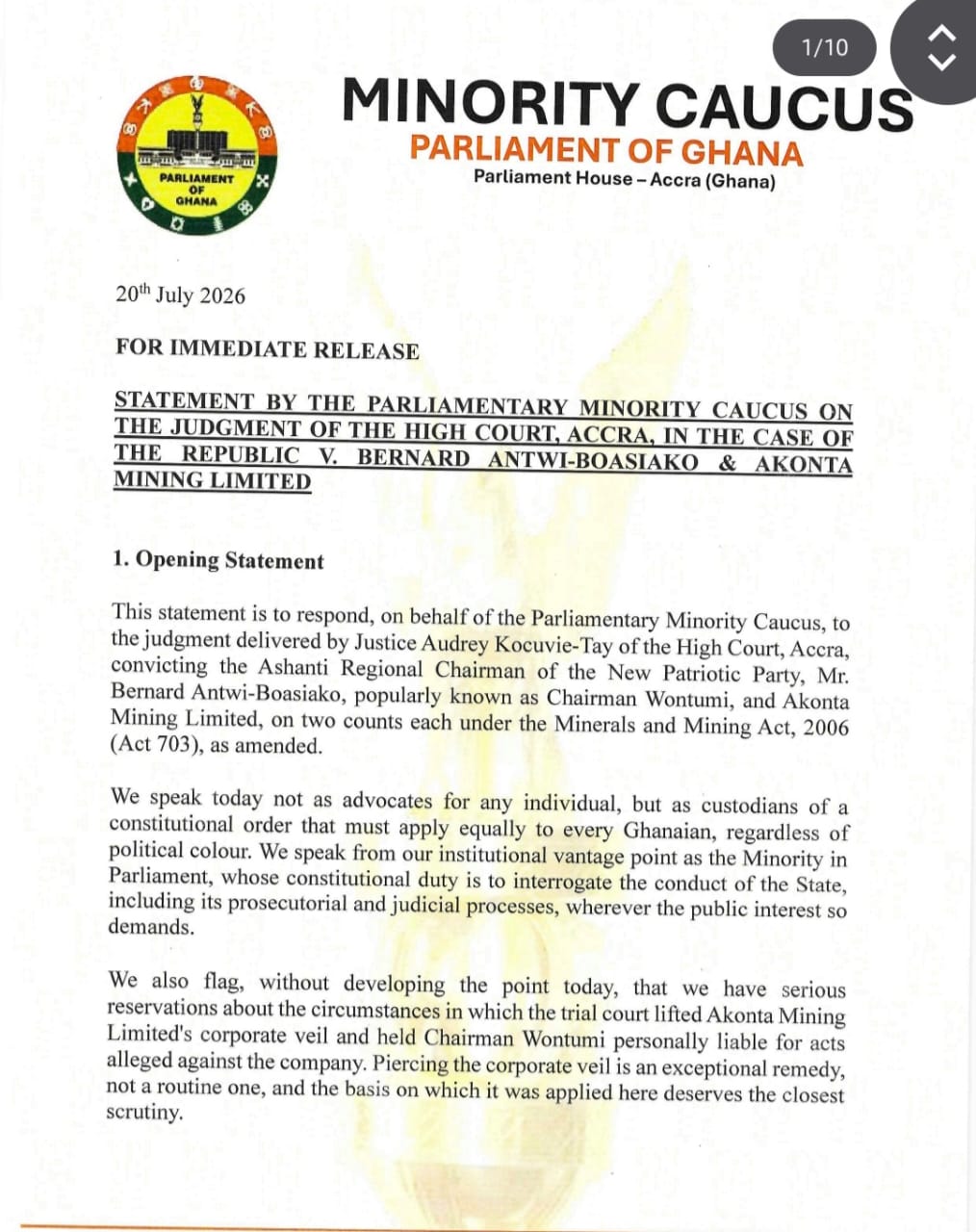
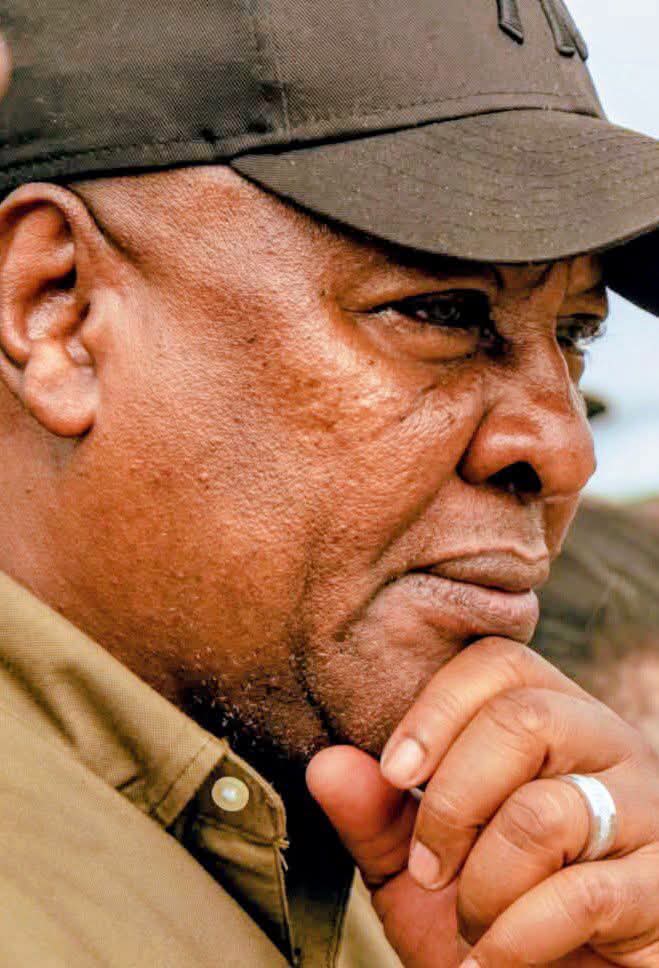
The Parliamentary Minority Caucus has strongly criticised the conviction and sentencing of New Patriotic Party (NPP) Ashanti Regional Chairman Bernard Antwi-Boasiako, popularly known as Chairman Wontumi, describing the proceedings as one that raises serious constitutional, legal and democratic concerns.
In a detailed statement issued on July 20, 2026, following the Accra High Court’s judgment, the Minority argued that while it respects the independence of the judiciary, it believes the trial was marred by procedural irregularities that undermine the legitimacy of the verdict.
Justice Audrey Kocuvie-Tay of the Criminal Division of the High Court convicted Chairman Wontumi and Akonta Mining Limited on two counts each under the Minerals and Mining Act, 2006 (Act 703), as amended.
The court found the NPP stalwart and his mining company guilty of offences relating to mining activities on the Samreboi concession and sentenced Chairman Wontumi to a 20-year prison term.
The judgment concluded a trial that had attracted nationwide attention due to its political significance and its connection to the government’s campaign against illegal mining.
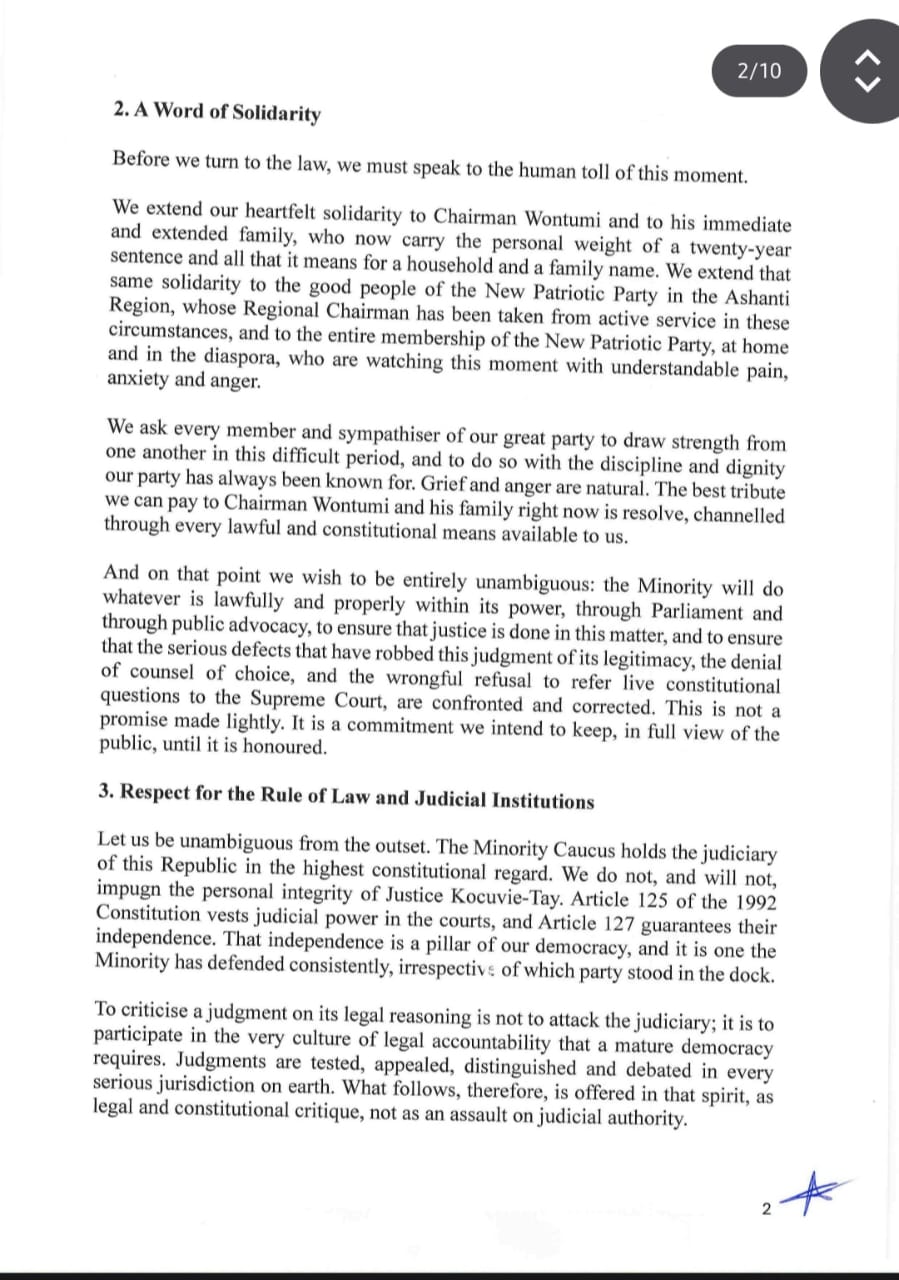
Responding to the ruling, the Minority insisted that its position should not be interpreted as a defence of illegal mining or an attempt to shield political actors from accountability.
The caucus reiterated its support for the prosecution of all persons involved in illegal mining regardless of political affiliation but argued that the exercise of prosecutorial and judicial power must be consistent with constitutional guarantees and applied equally to every citizen.
The Minority further questioned the legal basis upon which the High Court held Chairman Wontumi personally liable for acts allegedly committed by Akonta Mining Limited.
According to the statement, piercing the corporate veil is an exceptional legal remedy that should only be exercised under carefully established circumstances, adding that the court’s decision to do so deserves closer legal scrutiny.
The caucus also expressed solidarity with Chairman Wontumi, his family and members of the New Patriotic Party, particularly in the Ashanti Region, describing the 20-year custodial sentence as a painful moment for the party. It urged supporters to remain calm and pursue all available constitutional and legal avenues while assuring them that the Minority would use every lawful parliamentary and public platform to seek what it described as justice in the matter.
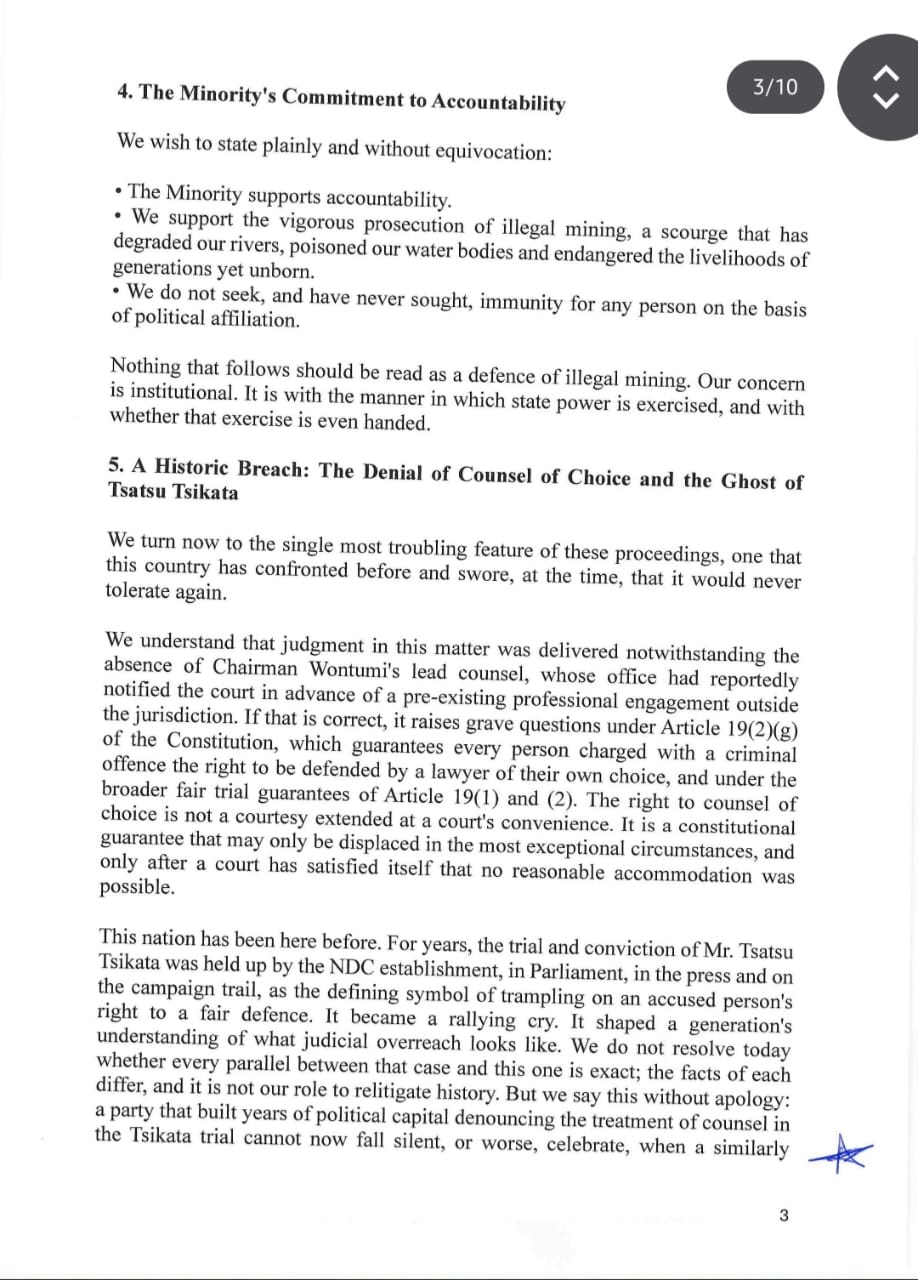
Central to the Minority’s criticism is its claim that Chairman Wontumi’s constitutional right to legal representation of his choice was compromised.
According to the statement, the trial court proceeded to deliver judgment despite the reported absence of lead defence counsel, Samuel Atta Akyea, whose office had informed the court of an earlier professional engagement outside the jurisdiction.
The caucus argued that Article 19 of the 1992 Constitution guarantees every accused person the right to counsel of their own choice and maintained that the court ought to have accommodated counsel before proceeding with judgment.
Drawing parallels with the prosecution of former Ghana National Petroleum Corporation Chief Executive Tsatsu Tsikata, the Minority argued that the legal history demonstrates the importance of protecting fair trial rights.
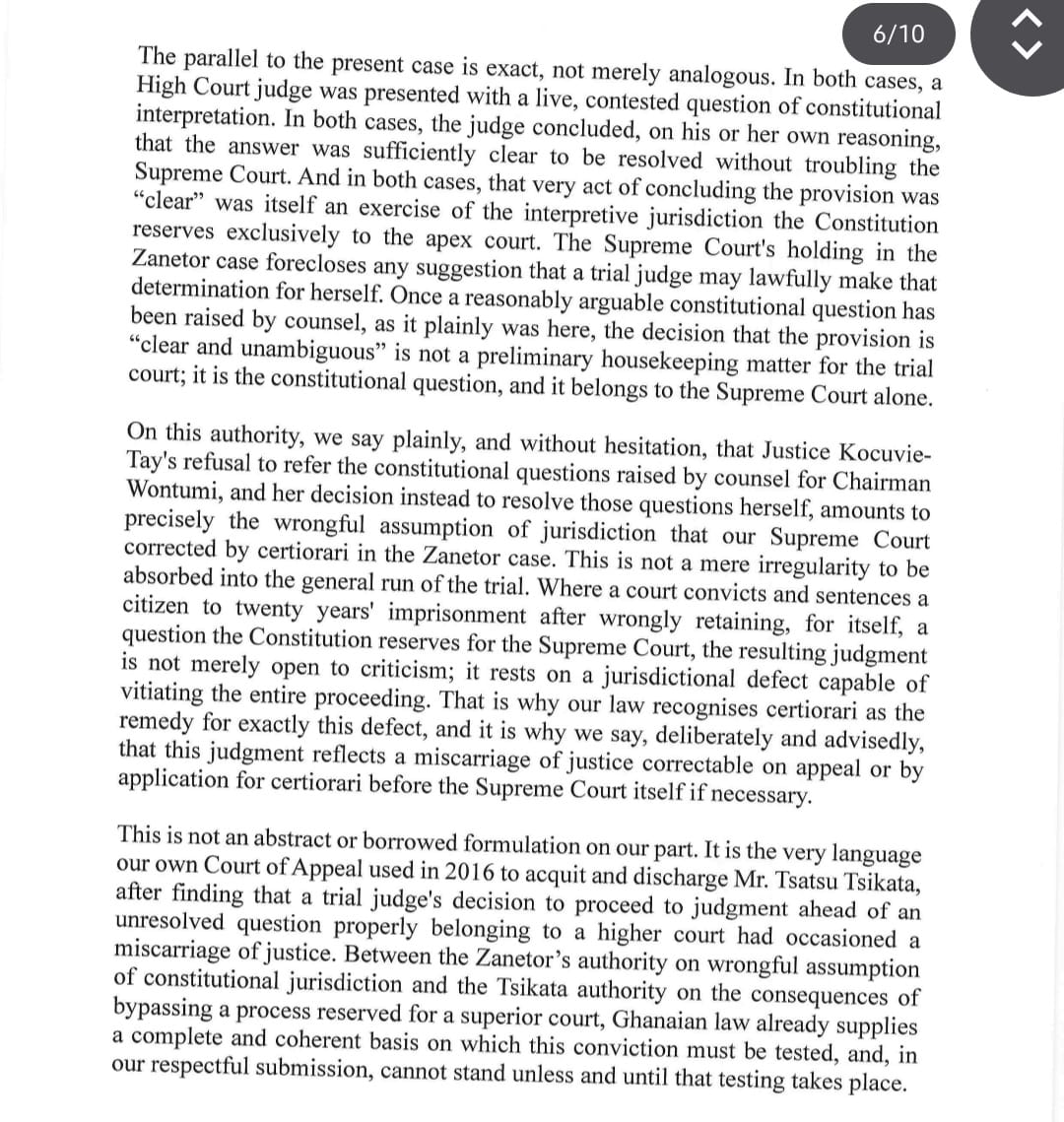
It noted that Mr. Tsikata’s conviction was overturned by the Court of Appeal in 2016 after the appellate court held that aspects of the trial process had occasioned a miscarriage of justice.
According to the Minority, the same constitutional standards applied in the Tsikata case should equally govern Chairman Wontumi’s appeal.
The statement also criticised the High Court’s refusal to refer constitutional questions raised by the defence to the Supreme Court. Before judgment, Mr. Atta Akyea had challenged Sections 14(1) and 99(2)(b) of the Minerals and Mining Act, arguing that the provisions were vague, overly broad and inconsistent with Article 19(11) of the Constitution.
However, Justice Kocuvie-Tay ruled that the provisions were clear and declined to refer the matter to the Supreme Court.
The Minority contended that under Article 130 of the Constitution, only the Supreme Court has exclusive jurisdiction to determine constitutional interpretation questions and argued that once a genuine constitutional issue had been raised, the trial court should have stayed proceedings and referred the matter to the apex court.
It cited the Supreme Court’s decision in the Ex Parte Dr. Zanetor Agyeman-Rawlings case as authority for its position that lower courts should not determine constitutional questions reserved for the Supreme Court.
According to the caucus, the refusal to refer the constitutional issues amounted to a wrongful assumption of jurisdiction capable of rendering the entire proceedings defective.
It maintained that this issue alone provides sufficient grounds for the Court of Appeal or the Supreme Court to review and potentially overturn the conviction.
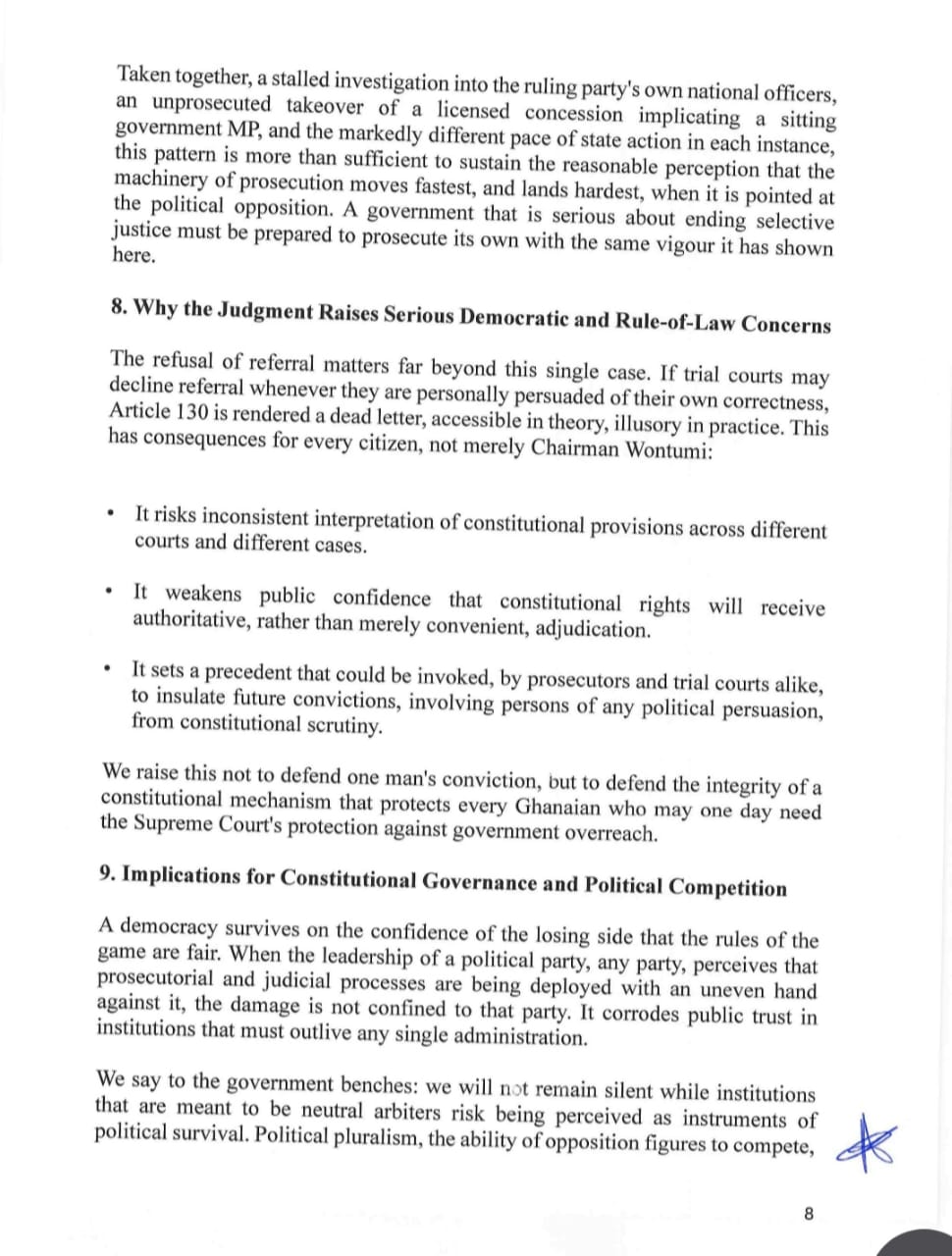
The Minority further alleged selective enforcement of Ghana’s anti-illegal mining laws. It questioned the status of investigations previously announced by the Attorney-General into National Democratic Congress officials Joseph Yamin and Yakubu Abanga over alleged illegal mining activities and also referred to reports concerning alleged mining activities linked to the Member of Parliament for Prestea Huni Valley.
The caucus argued that the apparent differences in the pace of prosecution create a public perception that state institutions are treating political opponents differently from members of the governing party.
Beyond Chairman Wontumi’s individual case, the Minority warned that allowing trial courts to reject constitutional referrals whenever judges consider statutory provisions to be clear could weaken Article 130 of the Constitution and diminish citizens’ access to constitutional justice.
It argued that such a precedent risks undermining public confidence in Ghana’s judicial system and could affect future litigants regardless of political affiliation.
The caucus therefore called on the Attorney-General to publish a comprehensive record of prosecutions relating to illegal mining across the political spectrum to demonstrate equal enforcement of the law.
It also urged the Court of Appeal to carefully examine any appeal challenging the alleged denial of counsel of choice and the refusal to refer constitutional questions to the Supreme Court.
Additionally, it appealed to the Judiciary to provide guidance to lower courts on the proper threshold for constitutional referrals under Article 130.
Concluding its statement, the Parliamentary Minority insisted that its intervention was not an attack on the judiciary but a call for constitutional consistency, judicial fairness and equal application of the law.
It pledged to continue supporting Chairman Wontumi’s legal efforts through all constitutional means available and maintained that the issues raised in the case extend beyond one individual to the broader protection of due process, the rule of law and the constitutional democracy.