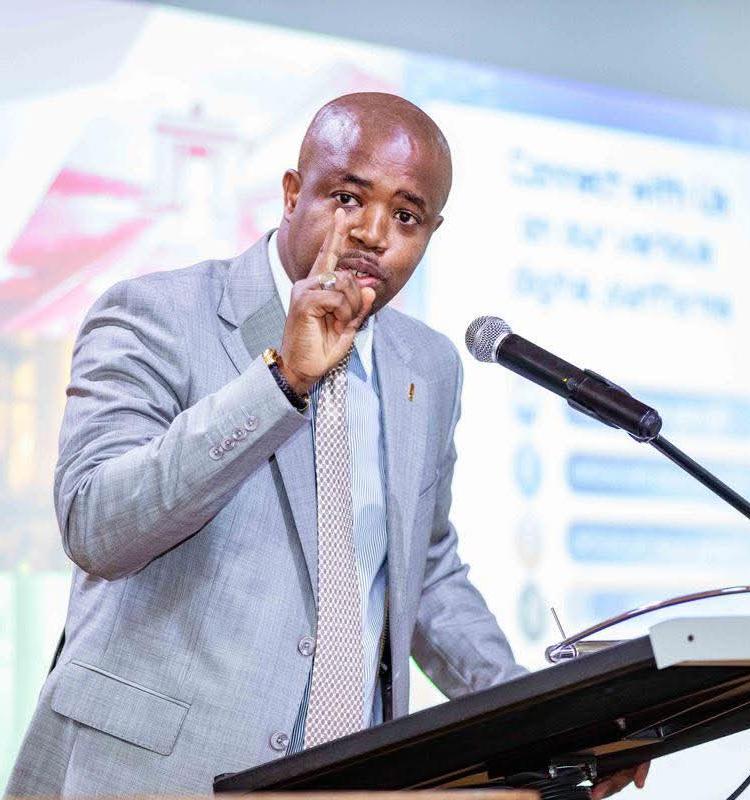
By Daniel Bampoe
The Chief Executive Officer of the National Petroleum Authority (NPA), Lawyer Godwin Edudzi Tameklo, has been honoured with the Outstanding Public Leadership Excellence Award at the 10th Ghana CEO Summit, a recognition that highlights what many observers describe as a growing culture of results-oriented leadership within the public sector.
The award, presented during one of the country’s most influential gatherings of business leaders, policymakers and public sector executives, comes at a time when discussions about governance, institutional efficiency and accountability continue to dominate national discourse.
While public institutions are frequently criticized for bureaucracy, inefficiency and slow service delivery, the recognition of the NPA’s chief executive has drawn attention to efforts aimed at repositioning key state institutions to deliver measurable outcomes.
The honour reflects developments at the National Petroleum Authority since Tameklo assumed office in January 2025.
Over the past year, the Authority has undertaken a series of initiatives aimed at strengthening regulatory oversight, improving operational efficiency and enhancing stakeholder confidence within the downstream petroleum sector.
A Critical Sector Under the Spotlight
The petroleum industry remains one of the most strategic sectors of the Ghanaian economy. Decisions taken within the sector have direct consequences for fuel prices, transportation costs, industrial production, inflation and household expenditure.
As a result, the leadership of institutions responsible for regulating the industry often comes under intense public scrutiny.
Historically, the NPA has played a pivotal role in ensuring stability within the downstream petroleum industry through regulation, monitoring and enforcement of standards.
However, the institution has also faced challenges associated with market volatility, compliance issues and the need to balance consumer interests with industry sustainability.
Against this backdrop, industry analysts say the Authority’s recent efforts to strengthen regulation and improve engagement with stakeholders have contributed to a renewed sense of confidence in the sector.
Leadership During A Period Of Institutional Reform
The recognition of Tameklo also comes amid the government’s broader agenda to reform public institutions and improve service delivery across state agencies.
Since taking office, President John Dramani Mahama’s administration has emphasized institutional renewal, accountability and efficiency as central pillars of governance. Within that framework, several public institutions have been encouraged to modernize operations and adopt performance-driven approaches.
Observers note that the NPA’s recent initiatives, including efforts to enhance regulatory compliance, improve operational responsiveness and support strategic government programmes, have positioned the Authority as one of the agencies increasingly cited as an example of institutional transformation.
According to governance experts, successful public sector leadership is often measured not merely by policy announcements but by the ability to translate vision into tangible outcomes. It is this emphasis on execution, they argue, that appears to have informed the decision to honour the NPA chief executive at this year’s summit.
Recognition Beyond The Individual
While the award bears the name of Lawyer Edudzi Tamakloe, many observers view it as recognition of the broader work being undertaken by the NPA and its staff.
The Authority has in recent months intensified stakeholder engagement, strengthened monitoring mechanisms and pursued reforms aimed at enhancing transparency and efficiency within the petroleum sector.
These measures have coincided with government efforts to improve economic management and strengthen confidence in public institutions.
The Ghana CEO Summit award therefore represents not only an acknowledgement of individual leadership but also an endorsement of institutional performance and reform efforts within the Authority.
Setting A Standard For Public Service
The recognition has also sparked conversations about the role of leadership in rebuilding public confidence in state institutions.
In an environment where citizens increasingly demand accountability and results from public officials, the award serves as a reminder that effective governance remains achievable when institutions are guided by competence, discipline and clear strategic direction.
Political and governance analysts say honours of this nature help establish benchmarks for public sector performance by rewarding innovation, professionalism and measurable impact rather than mere tenure in office.
They argue that such recognition is particularly significant at a time when many young professionals are questioning the attractiveness of careers in public service. Celebrating successful examples of institutional leadership, they say, can help inspire a new generation of public servants committed to national development.